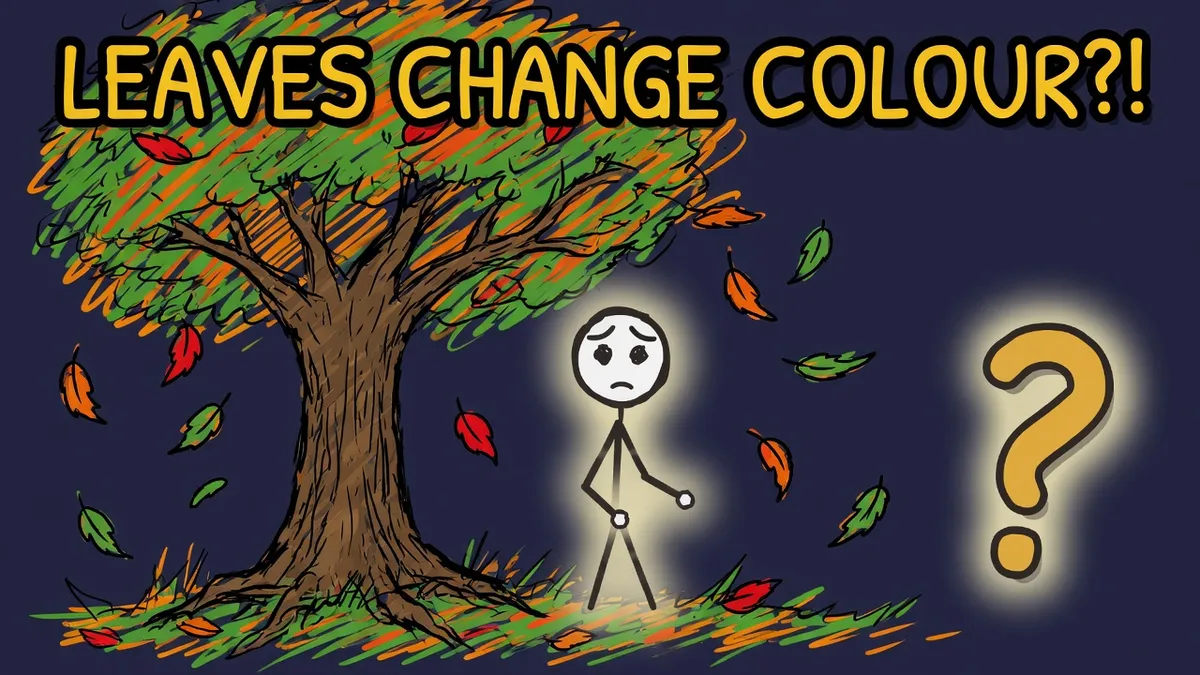
Here's the part that surprises people: most of autumn's colour was already in the leaf, all summer long. The gold, the amber, the buttery yellows, all of it was sitting there in June, completely invisible, drowned out by an ocean of green. Autumn doesn't paint those colours on. It takes the green away and lets what was always underneath finally show. But there's one colour that breaks this tidy story, one colour a leaf actually goes to the trouble of building on its way out. And that colour is where things get genuinely strange.
01 · The greenWhy chlorophyll is there in the first place
Start with the green, because everything else is downstream of it leaving. Chlorophyll is the pigment that runs photosynthesis: it catches sunlight and turns it into sugar, which is the whole business model of being a leaf. The catch is that chlorophyll is expensive and unstable. Sunlight slowly wrecks it, so through the growing season the tree is constantly tearing down damaged chlorophyll and building fresh, an endless, costly repair job that only makes sense while the sun is strong and the days are long.
And look at what a chlorophyll molecule is made of. At its heart sits a single atom of magnesium, cradled by four atoms of nitrogen. Nitrogen, in particular, is one of the most precious things a tree owns: it’s the limiting nutrient for most plants, the thing they’re forever short of. So each green leaf is, in a quiet way, a small vault of nitrogen and magnesium, locked up inside millions of chlorophyll molecules.
02 · The shutdownSalvage, not death
As the days shorten, the tree does the sensible thing a business does with an asset that’s about to stop paying: it strips it for parts. Lengthening nights are a calendar the weather can’t forge, and they cue the leaf into senescence, an orderly, tree-controlled teardown. Crucially, the leaf isn’t dying and happening to change colour. The colour change is the teardown, made visible.
The tree stops making new chlorophyll and starts dismantling what’s there, breaking it down specifically to reclaim the nitrogen and magnesium and haul them back into the twigs and trunk to be stored over winter. It’s called resorption, and a deciduous tree can pull back a large share of a leaf’s nitrogen before letting go. Dropping a leaf still stuffed with nitrogen would be like binning a wallet because you were done with the jacket. So the tree empties the pockets first.
03 · The unmaskingThe yellows were there the whole time
Now, as the green drains out, the leaf doesn’t turn colourless. It turns yellow and orange, and this is the bit worth slowing down for. Those pigments, the carotenoids, are the same family that colours carrots and egg yolks, and they were in the leaf the entire summer. They sit alongside the chlorophyll, helping harvest light and shielding the delicate machinery from damage. You never saw them because green is loud and there was vastly more of it.
Pull the green away and the carotenoids are simply revealed, not created. This is why yellow is the reliable, easy colour of autumn: it costs the tree nothing extra. It’s pure subtraction. Take away the chlorophyll, and a maple or a birch shows you the gold that was hiding behind the green since spring.
Red doesn't work like that at all. Anthocyanins aren't unmasked, they're manufactured, brand new, by a leaf that's already shutting down. A dying leaf spending energy to build a fresh pigment is a genuine puzzle, and biologists are still arguing about why.
04 · The red puzzleA pigment a dying leaf bothers to make
Here’s the twist that separates the two halves of autumn. Yellow is what’s left when you remove the green. Red is something the leaf actively adds. Anthocyanins, the pigments behind scarlet maples and crimson dogwoods, are not present all summer waiting to show through. They are synthesised fresh in autumn, built from sugars trapped in the leaf, at the exact moment the tree is otherwise busy cutting costs and pulling everything valuable out.
That’s the strangeness in one sentence: why would a leaf that’s being dismantled spend energy making a new pigment it never needed before? Whatever red is for, it has to be worth the cost, because a tree that’s carefully salvaging nitrogen down to the last atom is not one that wastes energy for nothing.
05 · The sunscreen answerThe leading explanation for red
The best-supported idea is that red is sunscreen. Draining a leaf of nutrients takes time, and it’s delicate work: the leaf still needs some functioning machinery to move materials out. But autumn light can be dangerous to a leaf in that state, bright sun landing on cold-stressed tissue whose protective chlorophyll is already breaking down. That combination causes photo-damage, which can shut the salvage operation down early.
A layer of red anthocyanin sits in the leaf like a tinted visor, soaking up excess light and mopping up damaging molecules, so the leaf can keep working safely and finish draining its nutrients. This is the photoprotection, or resorption-protection, hypothesis, and it fits a lot of the evidence: reds show up most in bright, cold, stressful autumns, exactly when a sunscreen would earn its keep. It’s the leading explanation, though it’s fair to say researchers still argue over just how much protection the red actually provides, and some studies find weaker effects than others.
06 · The aphid ideaA rival theory, and why it's contested
Then there’s a bolder, stranger idea, and it’s important to flag clearly that this one is contested. In 2001 the evolutionary biologist W.D. Hamilton, with Sam Brown, proposed that bright autumn colour is a signal aimed at insects, chiefly aphids looking for a tree to lay eggs on for the winter. On this view, a tree that can afford to blaze red is advertising its vigour and its chemical defences, in effect telling aphids “I’m strong and well-armed, settle somewhere weaker.” Because the display is costly, only genuinely healthy trees can fake it, which is what would make it an honest signal.
It’s an elegant story, and some studies have found correlations that fit it. But it hasn’t held up as cleanly as the physiology. Other work found that aphids don’t actually choose their host by leaf colour at all, keying instead on smell and on the tree’s condition directly. And the sunscreen explanation already accounts for most of the same patterns without needing insects at all. So treat the aphid hypothesis as a genuinely interesting maybe, not a settled fact. The evidence for it is largely correlational and openly disputed.
07 · The variablesOaks, evergreens, vivid years, and the map
A few loose threads, because they’re the questions people actually ask. Why do oaks just go brown? Oaks are loaded with tannins, bitter brown compounds that fend off insects and resist rot, and when an oak leaf makes little anthocyanin, those tannins are mostly what’s left behind. Why don’t evergreens change? Pines and firs keep their waxy, freeze-proof needles for years and photosynthesise right through winter, so there’s no annual shutdown to colour. They drop old needles quietly, a few at a time.
Why are some years so much better than others? The vivid autumns come from a run of warm, sunny days and cool, above-freezing nights. Sunny days make sugar; cool nights and the tightening abscission layer trap that sugar in the leaf, and trapped sugar is the raw material for red. Dry, bright, cool weather stacks the deck; a warm murky spell or an early hard frost mutes the whole thing. And why is the map so lopsided? Eastern North America and East Asia turn far redder than Europe, with something like 89 and 152 red-turning species respectively against Europe’s 24. The leading explanation is environmental: those regions get stronger autumn sun and sharper cold snaps during leaf fall, precisely the conditions that favour red sunscreen. Deeper evolutionary stories exist, but that part is still being argued.
08 · The payoffSo why do leaves change colour?
Because a tree is a careful accountant closing the books on summer. It stops making the expensive green pigment, breaks the old green down to bank the nitrogen and magnesium inside, and in doing so it lifts the curtain on the yellows and oranges that were quietly there all along. That much is pure housekeeping, made visible. The reds are the twist: a fresh pigment a dying leaf takes the trouble to build, most likely as sunscreen so it can finish emptying its pockets safely, possibly, though this part is contested, as a signal flare to insects. Either way, the forest you walk through in October isn’t decaying so much as being disassembled, thriftily, one salvaged atom of nitrogen at a time. The blaze of colour is just what careful recycling happens to look like.
Quick questions
Why do leaves change colour in autumn?
Because the tree is shutting the leaf down and salvaging its parts. It stops producing chlorophyll, the green pigment, and breaks down what's left to reclaim the nitrogen and magnesium inside. As the green fades, yellow and orange pigments (carotenoids) that were present all summer become visible. Red, where it appears, is a different story: it's a fresh pigment the leaf builds in autumn.
What actually makes leaves green?
Chlorophyll, the pigment that captures sunlight for photosynthesis. Each molecule is built around a single magnesium atom held by four nitrogen atoms, which is exactly why the tree bothers to dismantle it in autumn: those are valuable nutrients worth recovering rather than throwing away.
Where do the yellow and orange colours come from?
They were there the whole time. Carotenoids (the same family of pigments that make carrots orange and egg yolks yellow) sit in the leaf all summer, helping gather light and protect the chlorophyll. They're just drowned out by the far more abundant green. When the chlorophyll goes, the yellows and oranges are simply unmasked.
Why are red leaves different from yellow ones?
Yellow is subtraction: you remove the green and reveal what was underneath. Red is addition. Red anthocyanins are not present all summer waiting to show through, they are manufactured fresh during autumn from sugars trapped in the leaf. That's what makes red genuinely interesting: a leaf that's about to die spends energy building a brand-new pigment.
So why would a dying leaf make red pigment at all?
The leading idea is photoprotection: anthocyanins act like sunscreen. Autumn light can be damaging when it's bright and cold and the chlorophyll is breaking down, and a red screen lets the leaf keep safely draining its nutrients for longer. It's the best-supported explanation, though not the only one, and researchers still debate how much protection red really provides.
Is the aphid 'warning signal' theory true?
It's a real hypothesis but a contested one. In 2001 W.D. Hamilton and Sam Brown proposed that bright autumn colour is a signal to aphids, advertising that a tree is vigorous and well-defended so pests settle elsewhere. Some later work found correlations that fit, but other studies found aphids don't actually key on leaf colour, and the physiological sunscreen explanation covers most of the same facts. Treat it as an intriguing maybe, not settled science.
Why are some autumns much more vivid than others?
Weather. The brightest reds come from a run of warm, sunny days followed by cool (but not freezing) nights. Sunny days let leaves keep making sugar; cool nights and the closing abscission layer trap that sugar in the leaf, and trapped sugar is the raw material for red anthocyanins. Dryish, bright, cool conditions stack the deck. Warm dull nights or an early hard frost mute the display.
Why do oak leaves just turn brown?
Oaks are heavy in tannins, bitter brown compounds that deter insects and slow decay. When an oak leaf's chlorophyll and carotenoids fade and it makes little or no anthocyanin, the tannins are mostly what's left, so the leaf lands on a muddy brown rather than gold or scarlet.
Why don't evergreens change colour?
Evergreens like pines and firs keep their needles for several years rather than dropping them all each autumn. The needles are narrow, waxy-coated and filled with freeze-resistant fluid, so they survive winter and keep photosynthesising. There's no annual shutdown to trigger a colour change. They do shed old needles, just a few at a time, year-round.
What triggers the whole process, temperature or daylight?
Mainly the shortening days. Lengthening nights are a reliable calendar the weather can't fool, and they cue the tree to begin senescence and build the abscission layer. Temperature then fine-tunes the timing and, especially, the vividness of the colour. A warm spell can delay things; a sharp cold snap can intensify reds or, if it's a hard freeze, cut the show short.
What is the abscission layer?
It's a zone of specialised cells at the base of the leaf stalk that the tree builds up in autumn. It gradually seals off the leaf, choking the flow of water and sugars, which both traps sugar in the leaf (feeding red pigment) and eventually weakens the join so the leaf drops. A protective corky layer forms behind it to seal the scar.
Why does North America turn so much redder than Europe?
It's a real geographic asymmetry. Eastern North America and East Asia have far more red-turning tree species than Europe does. One well-supported explanation is environmental: those regions get stronger autumn sunlight and sharper cold snaps during leaf fall, conditions that favour red sunscreen pigments. Deeper evolutionary explanations (including ancient herbivore pressure) are proposed but remain debated.
Do the pulled-back nutrients actually get reused?
Yes. Resorption is the whole point of the exercise. A deciduous tree can recover a large share of a leaf's nitrogen (and other nutrients) before it drops, storing them over winter to build next spring's leaves. Losing a leaf still full of nitrogen would be like throwing away money, so the tree salvages first and sheds second.
Do the leaves die because they lose their green?
It's the other way round. The leaf isn't dying because the colour changes; the colour changes because the leaf is being deliberately dismantled. Senescence is an orderly, tree-controlled teardown to recover valuable materials, and the colours are visible side effects of that process, not the cause of it.
Take the quiz on this
A quick 4-question check on what you just read. Get them right to earn XP: no points for just scrolling.
Our sources 12 checked
// every claim on this page was checked before it went up