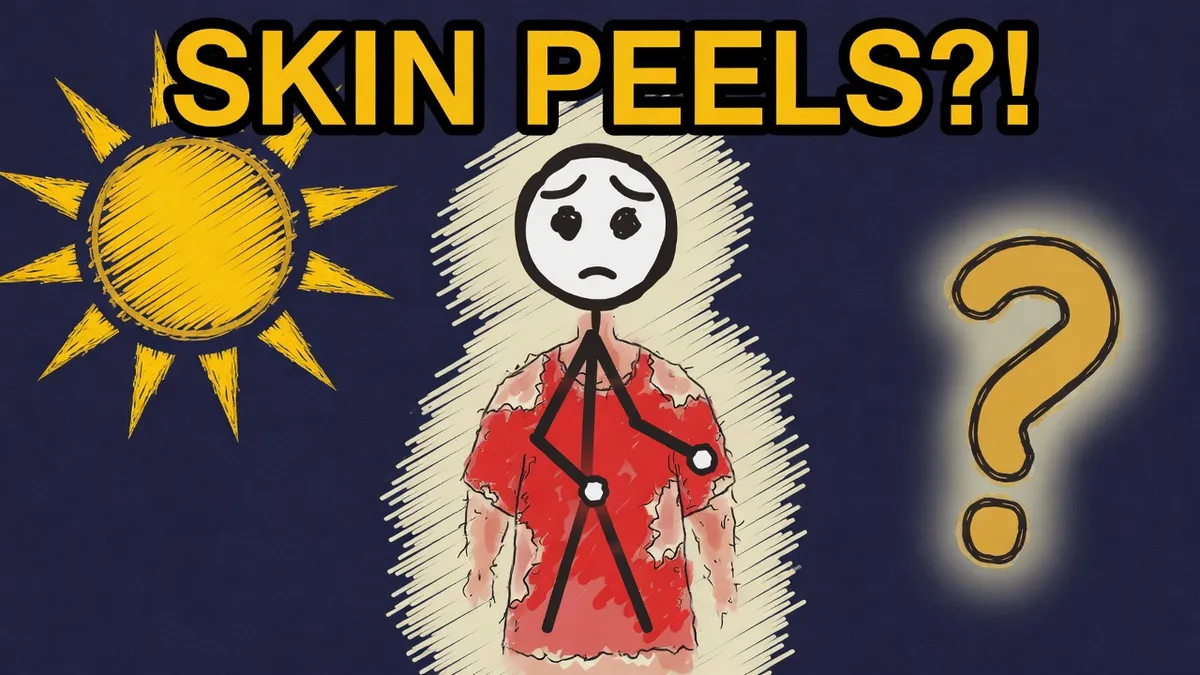
A few days after a bad day at the beach, your shoulders start to flake. You peel a strip of skin away, half fascinated, half disgusted, and think of it as the burn "wearing off". It is easy to see peeling as the boring end of a sunburn, dead skin sloughing away. But that is not what is happening. The peeling is the visible end of a deliberate, ruthless decision your body made at the level of individual cells: to kill off part of itself, on purpose, to protect the rest.
01 · The invisible injuryUV breaks your DNA
Sunburn does not start with redness. It starts inside your cells, hours earlier, with damaged DNA. Ultraviolet light, mainly the UVB part of sunlight, carries enough energy to physically break the DNA inside your skin cells. It is the same energetic sunlight that gets scattered across the sky, the reason the sky is blue, but at the skin it does something less lovely: it strikes the genetic code in cell after cell and knocks it out of shape. A single sunburn can damage millions of cells this way. The redness and heat you feel are just the aftermath.
02 · The fatal decisionCells that choose to die
Faced with DNA damage, a cell has a choice: repair it, or, if the damage is too severe, self-destruct. When the harm is beyond safe repair, the cell triggers a built-in suicide program called apoptosis. This is not the cell failing. It is the cell deliberately shutting itself down in an orderly way, on the body’s instructions. In the world of a sunburn, huge numbers of cells make exactly this call at once, choosing death over the risk of carrying on with broken instructions.
03 · Sunburn cellsThe casualties have a name
Dermatologists even have a term for the cells that die this way: sunburn cells. They are keratinocytes, the main cells of your outer skin, that have undergone programmed death after UVB shredded their DNA beyond repair. When you look at a peeling sunburn under a microscope, you are looking at a battlefield of these sunburn cells, killed off in their millions. The flaking you see with the naked eye is simply your body carting away the dead, layer by layer, and pushing fresh, undamaged skin up from beneath.
Here is why the peeling matters more than it looks. A cell with badly broken DNA is dangerous: if it survived and kept dividing, one of those mutations could, over time, become a skin cancer. By forcing the most damaged cells to self-destruct and then shedding them, your body is removing the very cells most likely to turn cancerous, before they get the chance. The uncomfortable flaking after a burn is, quite literally, cancer prevention in action, a mass purge of cells your body decided were too dangerous to keep.
04 · Don't rush itWhy you shouldn't peel it yourself
Knowing all this changes how you should treat a peeling burn. The dead skin is doing a protective job, covering the raw new skin underneath until it is ready, so pulling it off early exposes tender, unprotected tissue and interferes with healing. Peeling usually begins about three days after the burn and finishes as the burn heals, often within a week or so. The best help you can give is gentle: cool the skin, keep it moisturised, stay hydrated, and, if there are blisters, leave them alone, because a blister marks a deeper, second-degree burn.
05 · The honest warningPeeling means damage happened
It is worth being clear-eyed. A peeling sunburn is proof that real DNA damage occurred, enough that your body had to kill off cells to deal with it. Not every burn peels, and peeling is not the only sign of harm; even a burn that never flakes has done damage, and a tan itself is a response to injury. One burn rarely causes cancer on its own, but the risk builds with every accumulated exposure over a lifetime. That is why the only real way to avoid the peeling is to avoid the burn, with sunscreen, clothing, and shade.
06 · The payoffSo why does skin peel after sunburn?
Because your body chose to. Ultraviolet light broke the DNA in millions of your skin cells, and rather than gamble on cells that might turn cancerous, your body ordered the worst-damaged ones to self-destruct, then began shedding them, which you see as peeling. It is not the burn wearing off. It is a deliberate cellular purge, a clean-out of dangerous cells and a fresh start underneath. The flaking is uncomfortable and unglamorous, but it is also your body doing something quietly heroic: sacrificing part of itself, on purpose, to keep you safe from what the sun tried to do.
The animated version
Same answer, told as a little animated story with the strange little stickman acting it out. Dry, quick, and, obviously, correct.
Quick questions
Why does skin peel after sunburn?
UV light damages the DNA in your skin cells. Cells too damaged to repair safely self-destruct through programmed cell death, and your body sheds them as peeling skin while new cells grow underneath. The peeling is your body clearing out the damaged cells.
Is peeling skin after sunburn bad?
Peeling itself is not dangerous; it is your body cleaning out damaged cells. But it does mean a real burn and DNA damage happened, which is a signal to protect your skin better next time.
Should you peel sunburned skin?
No. Dermatology guidance says do not pull off peeling skin or actively exfoliate. Let it slough off on its own so the healing skin underneath stays protected.
How long does sunburn peeling last?
Peeling usually begins about three days after the burn and stops once the burn heals, roughly seven days for a mild to moderate sunburn, though it can run a little longer.
Does peeling mean skin damage?
Yes. Peeling is the aftermath of cells dying from UV injury. Millions of cells sustain damage in a single sunburn, and peeling is the visible result of your body clearing the worst of them.
How do you stop sunburn from peeling?
You cannot really stop it; the shedding runs its course and cannot be sped up. You can ease it by keeping skin well moisturised with aloe or a gentle lotion and staying hydrated.
What are sunburn cells?
Sunburn cells are skin cells, specifically keratinocytes, that undergo programmed cell death after UVB exposure causes severe, unrepairable DNA damage. They are your body removing cells too damaged to keep.
Why does the body kill its own skin cells after sunburn?
Because a cell with badly broken DNA could become unstable and potentially cancerous. Self-destruction removes that risk before a mutation can grow into a tumour.
Does peeling skin mean the sunburn is healing?
Yes, peeling is part of healing. Damaged cells shed while new, healthy skin forms underneath, and peeling usually ends as the burn finishes healing.
Which UV rays cause sunburn and peeling?
UVB is the main driver of sunburn and the DNA damage that leads to peeling. UV light in general carries enough energy to break DNA in skin cells.
Should you pop sunburn blisters?
No. A blister means a second-degree burn. Let blisters heal on their own instead of popping them, which helps protect you from infection.
Can you prevent sunburn peeling entirely?
The only reliable way is to prevent the burn itself. UV exposure is the most preventable skin cancer risk factor, so use broad-spectrum SPF 30 or higher, cover up, and seek shade.
Our sources 6 checked
// every claim on this page was checked before it went up