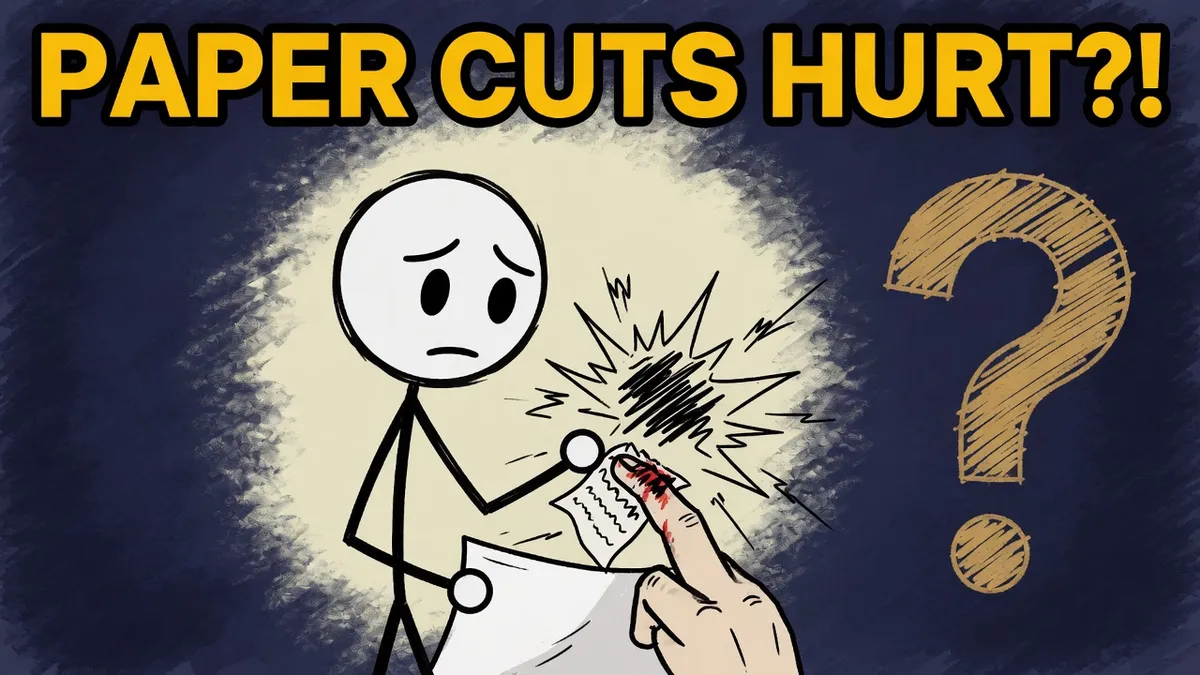
It is one of the great injustices of the human body. You can bang your shin hard enough to raise a lump and shrug it off, then draw a sheet of paper across a fingertip, open a cut you can barely see, and yelp. A paper cut is one of the smallest wounds you can get, and it can hurt more than injuries ten times its size. That is not your imagination, and it is not weakness. It is a genuine quirk of anatomy and physics, and once you understand it, the outrage makes perfect sense.
01 · The scene of the crimeThe most sensitive skin you have
Almost every paper cut happens in the same place: the fingertips. And your fingertips are not ordinary skin. They carry one of the highest densities of pain-sensing nerve endings, called nociceptors, anywhere on your body. There is a good reason for that: your fingertips are how you feel and manipulate the world, from threading a needle to reading a texture, and fine control demands a huge number of sensors packed into a tiny area. The catch is that all those sensors, so useful for touch, also mean a wound there sets off far more alarm bells than the same wound almost anywhere else.
02 · Shallow but viciousStraight through the alarm layer
A paper cut is shallow, and that turns out to matter enormously. It slices cleanly through the very top layer of skin, exactly where those pain receptors are most concentrated, but it does not go deep. So it damages the maximum number of nerve endings while doing almost no deeper harm. A deep cut might sever more tissue overall, but a paper cut is precision-targeted at the one layer richest in pain sensors. It is, in a sense, the worst possible depth: deep enough to hit the nerves, shallow enough to leave them fully exposed.
Here is the twist that flips your intuition. The very thing that makes a paper cut seem trivial, that it barely bleeds, is exactly why it hurts so much. A deeper cut bleeds, clots, and scabs, and that clot seals the raw nerve endings away from air and friction within minutes, like a natural bandage. A paper cut skips that whole process: it is too shallow to bleed much, so no clot forms, and the severed nerves are left uncovered, sitting exposed and firing. Less blood does not mean less pain. It means more, and longer-lasting, pain.
03 · The jagged bladePaper is secretly a saw
Paper feels smooth, but that is a lie your fingers tell you. Under a microscope, the edge of a sheet is jagged and serrated, more like a tiny saw than a clean blade. So when it cuts, it does not slice neatly the way a sharp knife would. It saws and tears, shredding the tissue and the nerve endings in its path, leaving a messier, more ragged wound than its size suggests. The same cut from a scalpel would be cleaner and, oddly, less painful. Paper does maximum damage while looking utterly harmless.
04 · No rest for the woundWhy it keeps hurting
Now add the final insult: location, again. Your fingertips are in near-constant use. You type, grip, wash, point, and fidget with them all day, which means a fingertip cut is repeatedly flexed and pulled open long after it should have started to settle. Each time it reopens, the raw, unclotted nerve endings are disturbed afresh, and because there is no scab shielding them, the pain resets. It is a bit like the throb of pins and needles: nerves firing in a way you cannot easily switch off. That is why a paper cut can nag for a day or more. Later, as it settles, the same fingertip may itch as the repair crew kicks in, the same odd itch you get when wounds itch as they heal.
05 · A note on the pain itselfIt is trying to help
As maddening as it is, the pain has a purpose. By making you acutely aware of the cut, it prompts you to protect that fingertip, keep it clean, and avoid making the damage worse, which lowers the risk of infection in a spot you are always touching things with. The chemistry may play a small extra role too: residues left on paper can irritate certain receptors and add a sting. But the pain is fundamentally protective, an outsized alarm for an undersized wound, doing its job a little too well. (Oddly, a well-aimed swear can blunt the sting for a moment: swearing really does reduce pain a little, in lab tests.)
06 · The payoffSo why do paper cuts hurt so much?
Because everything lines up against you at once. The cut lands on the most nerve-dense skin on your body, slices exactly through the layer richest in pain sensors, is too shallow to bleed and clot, so the raw nerves stay exposed, is torn by a secretly jagged edge, and sits on a fingertip you cannot stop using. Any one of those would sting. Together they turn a wound you can barely see into a pain you cannot ignore. The next time a sheet of paper gets you, take small comfort in this: your finger is not overreacting. It is doing precisely what a fingertip is built to do, just at the worst possible moment.
The animated version
Same answer, told as a little animated story with the strange little stickman acting it out. Dry, quick, and, obviously, correct.
Quick questions
Why are paper cuts so painful?
A paper cut lands on the fingertips, which have among the densest concentrations of pain nerve endings in the body, and it is shallow enough to sever those nerves without forming a protective clot. So you get maximum nerve damage in the most sensitive spot, left exposed. That combination makes a tiny wound hurt far out of proportion to its size.
Why do paper cuts hurt more than bigger cuts?
Bigger, deeper cuts bleed and clot, and the clot quickly covers the raw nerve endings. A paper cut is too shallow to bleed much, so the damaged nerves stay open to the air and keep firing. Location matters too: paper cuts usually hit nerve-dense fingertips, while a deeper cut may be somewhere with far fewer nerves.
Why don't paper cuts bleed?
The wound is very shallow and thin, often not deep enough to open many blood vessels. Ironically, that lack of bleeding is why it hurts: without blood there is no clot to shield the exposed nerve endings.
Why do fingertips hurt more than other body parts?
Fingertips are packed with nerve endings because we use them to feel and manipulate the world with precision. More nerve endings in a small area means any cut there triggers many more pain signals than the same cut elsewhere.
Are paper cuts dangerous?
Usually no. They are minor, shallow wounds that typically heal in two to three days. The pain is actually protective, prompting you to keep the area clean and protected so it does not get infected.
Why do paper cuts hurt more the next day?
The cut sits on a fingertip you keep using, so it repeatedly flexes and reopens, re-irritating the exposed nerves. With no clot sealing it and constant exposure to air and friction, the pain can linger or feel worse before it finally heals.
Why does a paper cut sting or feel like it's on fire?
Paper severs many surface nerve endings at once and leaves them exposed to air and moisture, so they keep firing. Some nerves also respond to chemical irritants possibly left by paper processing, which can add a stinging or itchy edge.
Is a paper cut really cut with a smooth edge?
No. Paper looks smooth but under a microscope its edge is jagged and serrated. It saws and tears through skin more like a tiny serrated blade than a clean knife, causing messier nerve and tissue damage.
Do paper cuts hurt because of the paper's chemicals?
Chemicals may play a small, secondary role. Residues like bleaches used to whiten paper can irritate certain nerve receptors and add itch or sting. But the main reasons are nerve density plus a shallow, open, non-clotting wound, not the chemicals.
Why does a paper cut keep hurting when I use my hands?
Because it is on a fingertip you flex constantly, the wound repeatedly reopens and stretches, disturbing the raw nerve endings. Since there is no clot to protect them, each movement re-triggers the pain.
How long do paper cuts take to heal?
Most paper cuts heal within about two to three days because they are shallow. Keeping the cut clean and covered can reduce irritation and reopening while it heals.
Should I put a bandage on a paper cut?
Covering a paper cut can help, because it does what the missing clot would do: it shields the exposed nerve endings from air and friction and keeps the cut from reopening as you use your hands, which can ease the pain and protect against infection.
Why does lemon juice or salt sting a paper cut so badly?
Because the raw nerve endings are still open to the air. Without a clot covering them, any acid, salt or other irritant lands straight on the damaged surface and fires more pain signals. That is the same reason air and friction keep a paper cut nagging: the nerves are exposed. It is not that lemon is uniquely vicious; it is that the shallow wound never got a proper shield.
Our sources 6 checked
// every claim on this page was checked before it went up