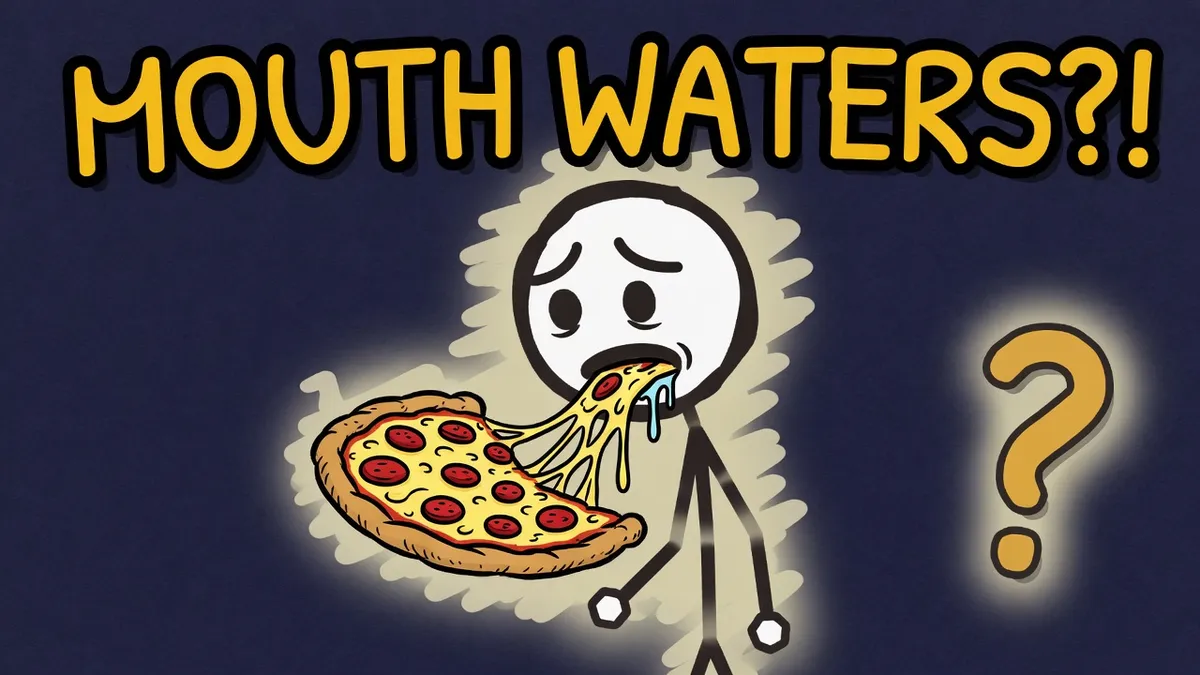
Picture biting into a lemon. The bright yellow skin, the sour juice hitting your tongue. If your mouth just watered a little at nothing but a sentence, you've stumbled into one of the body's neatest tricks: a reflex so automatic it can be fired by a thought. You didn't decide to salivate. You couldn't have stopped it if you tried. So what exactly did that word switch on?
01 · Three factories, always running
The water itself comes from three pairs of salivary glands. The parotids sit in front of each ear, the submandibulars under your jaw, and the sublinguals beneath your tongue, all quietly piping saliva into your mouth through little ducts. Together they turn out a startling amount: roughly 1 to 1.5 litres a day, nearly all of it swallowed without you ever noticing. Saliva is about 99 percent water; the other 1 percent, the enzymes, minerals and proteins, is the part that does all the clever work.
02 · A reflex you don't control
Here’s the key thing: you are not in charge of this. Salivation is run by the autonomic nervous system, the same automatic pilot that handles your heartbeat and breathing, and specifically by its parasympathetic (“rest-and-digest”) branch. When food touches the taste and touch sensors in your mouth, signals shoot to salivation centres in the brainstem, which fire straight back to the glands: open the taps. You decide to salivate about as much as you decide to blink, which is to say, not at all.
03 · The jump startWatering before the food arrives
The truly clever part is that the trigger doesn’t need food in your mouth at all. The mere sight, smell, or even thought of a good meal can start the flow. This anticipatory burst is called the cephalic (head) phase of digestion, and it’s your body loading up in advance, priming you to chew, taste and start breaking food down the instant it lands. It’s a head start on the whole meal, ordered by your brain before your teeth get involved.
This is the exact reflex Ivan Pavlov made famous. His dogs began drooling not just at food, but at the footsteps of the person who fed them. He'd stumbled onto how anticipation itself can pull the trigger, and in doing so discovered classical conditioning, one of the foundations of modern psychology, all because he noticed a dog's mouth watering too early.
04 · Why the effort is worth it
Your body doesn’t pour out litres of saliva for nothing. It’s doing several jobs at once. It contains the enzyme amylase, which starts breaking starches into sugars while food is still in your mouth (chew bread long enough and it turns faintly sweet, that’s amylase working). It lubricates food so you can chew and swallow. It dissolves food molecules so they can reach your taste buds, which means without saliva you’d barely taste anything at all. And it protects your teeth, buffering acids and ferrying calcium and phosphate to help re-harden enamel.
05 · The unpleasant floodWatering before you're sick
That tooth-protecting role explains the least pleasant kind of mouth-watering: the sudden flood of saliva right before you vomit. When your body senses that stomach acid is about to come washing up through your mouth and throat, it releases a burst of extra, watery saliva to help dilute, rinse and partly neutralise that acid, shielding your enamel and soft tissues from the worst of it. It feels awful and ominous, which it is, but it’s also your body throwing up a chemical shield a second before the damage arrives.
06 · The payoffThe sour champion, and the dry opposite
One last curiosity: not all foods water your mouth equally. Sour things win by a mile. In lab tests, concentrated citric acid, the tang in lemons, triggered more saliva than actual food, which is exactly why imagining that lemon worked on you back in the first line. And the flip side of all this is what happens when the taps run dry: a condition called xerostomia, or dry mouth, where too little saliva makes chewing, tasting, swallowing, and protecting your teeth suddenly hard. You almost never think about saliva, until you don’t have enough of it. Then you realise the quiet, constant flood was doing a dozen jobs all along, most of them before you even swallowed a bite.
Quick questions
Why does my mouth water when I see food?
The sight, smell or even thought of food triggers a nerve reflex called the cephalic phase of digestion. Your brain signals your salivary glands to start producing saliva before the food ever reaches your mouth, preparing you to chew, taste and digest it.
What controls salivation in the body?
Salivation is an involuntary reflex run by the autonomic nervous system. Its parasympathetic (rest-and-digest) branch is the main driver of the watery saliva your glands pour out, so you cannot consciously switch it on or off.
How much saliva do you produce in a day?
A healthy adult produces roughly 1 to 1.5 litres of saliva every day. You swallow almost all of it without noticing, and production naturally drops while you sleep.
Which glands make saliva?
Three pairs of major glands make most of it: the parotid glands in front of the ears, the submandibular glands under the jaw, and the sublingual glands under the tongue. Together they produce most of your saliva, with hundreds of tiny minor glands making the rest.
Why does my mouth water before I throw up?
When your body senses vomiting is coming, your salivary glands release a burst of extra saliva. Because saliva is mostly water and mildly alkaline, it helps dilute and rinse the stomach acid about to pass through your mouth, giving your teeth and throat some protection.
Why do sour foods make my mouth water so much?
Sour tastes, driven by acids like the citric acid in lemons, are the single strongest trigger for salivation. Studies found concentrated citric acid produced more saliva than ordinary foods, which is why just imagining biting a lemon can make you drool.
What does saliva actually do?
Saliva lubricates food for chewing and swallowing, starts digesting starch with the enzyme amylase, dissolves food so you can taste it, and protects your teeth by buffering acids and supplying minerals. It also contains proteins that help defend against infection.
What is the enzyme in saliva called?
The main digestive enzyme in saliva is amylase. It begins breaking starches down into simpler sugars while food is still in your mouth, which is why bread can start to taste slightly sweet if you chew it for a while.
Can you taste food without saliva?
Not well. Taste buds detect molecules only once they are dissolved in liquid, and saliva is that liquid. When your mouth is very dry, food tastes flat or bland until saliva returns.
What is Pavlov's dog experiment about salivation?
Ivan Pavlov noticed his dogs salivated not just when eating but at the sight of food or the footsteps of the person who fed them. By pairing a neutral signal with food, he showed animals can learn to salivate to that signal alone, a process now called classical conditioning.
Why is my mouth always dry?
Persistently dry mouth is called xerostomia and means your glands are not making enough saliva. Common causes include dehydration, many common medications, the autoimmune condition Sjogren's syndrome, and radiation treatment to the head or neck.
Is saliva mostly water?
Yes. Saliva is about 99 percent water. The remaining 1 percent, made up of enzymes, electrolytes, mucus and protective proteins, is what gives it its digestive, lubricating and tooth-protecting powers.
Why does my mouth water when I'm hungry?
Hunger primes the same anticipatory reflex that food does. Thinking about eating, smelling cooking, or seeing a meal signals your brain that food may be coming, and it tells your glands to start producing saliva in preparation.
Does saliva protect your teeth?
Yes. Saliva is mildly alkaline and buffers acids in the mouth, and it carries calcium and phosphate that help re-harden tooth enamel. That is one reason people with chronic dry mouth get more cavities.
Our sources 8 checked
// every claim on this page was checked before it went up